
Portraits & Figures
Character Studies
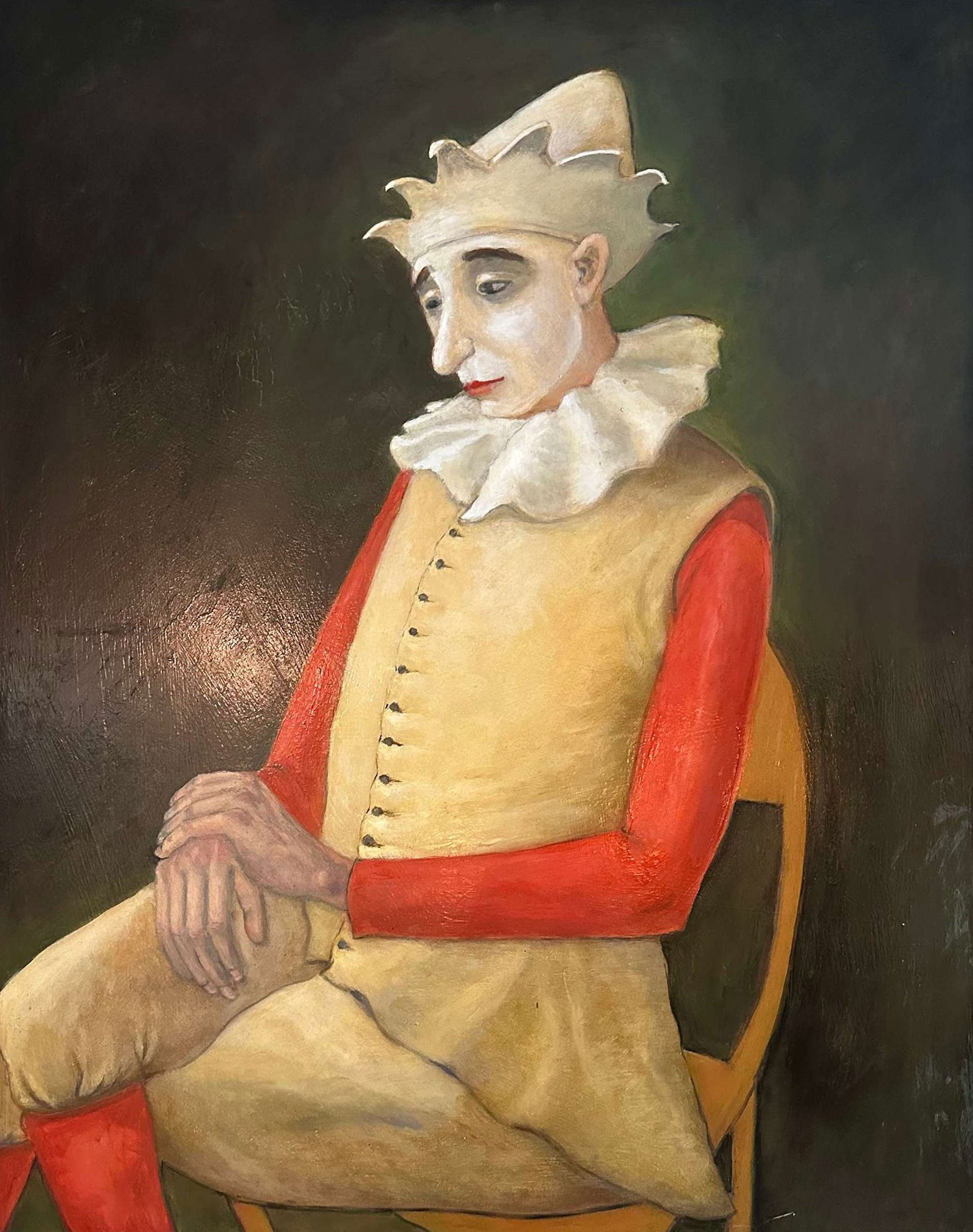
Arthur Gebhardt’s portraits and figure studies demonstrate his fascination with people as living subjects caught in moments of humor, reflection, vulnerability, and presence. From costumed clowns and carnival performers to family members, café-goers, and self-portraits, his canvases show his skill and interest in people—real and imagined.
A close friend revealed:
“A lot of his paintings told the story of his life. He often went back and revisited moments in his life and people that were important to him. An example is the painting of his uncle sitting in a chair, which is one of my favorites. It might seem simple or unremarkable, but his uncle was an alcoholic and had all these problems in his life and he told me that’s why he did the portrait. Later, he seemed to be visiting his wife’s story and their story together with all their family connections, which were spiritual because he was showing someone who has passed and how their history sticks with us.”
His clown paintings are among the most striking, recurring throughout his career. His daughter Ellen recalls these as “some of his best paintings,” noting how the figures with their oversized costumes, painted faces, and stooped postures portrayed hidden melancholy.
Portraiture of Personal Record
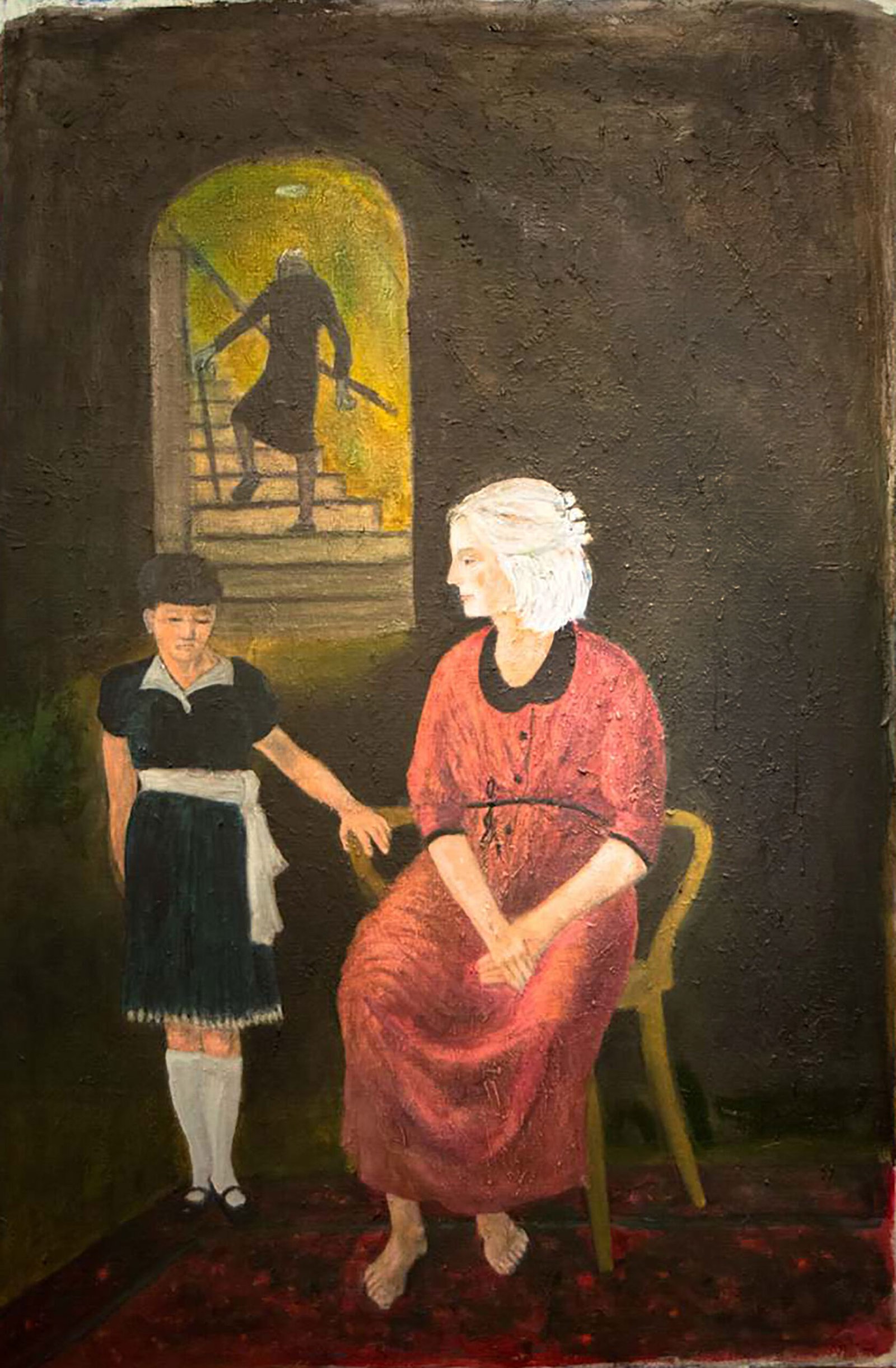
His portraits of family members carried equal weight. Daughter Sarah remembered how he painted their mother multiple times across the years.
“My dad painted my mom in three stages of her life on one canvas. First, she is standing as a little girl, probably in her first communion white dress. Then another version of her is with grayish hair, and third is her hunched over trying to walk up the stairs with a cane. My dad painted that after my mom died. It’s huge, amazing, and a very moving piece. It’s so personal to me.”
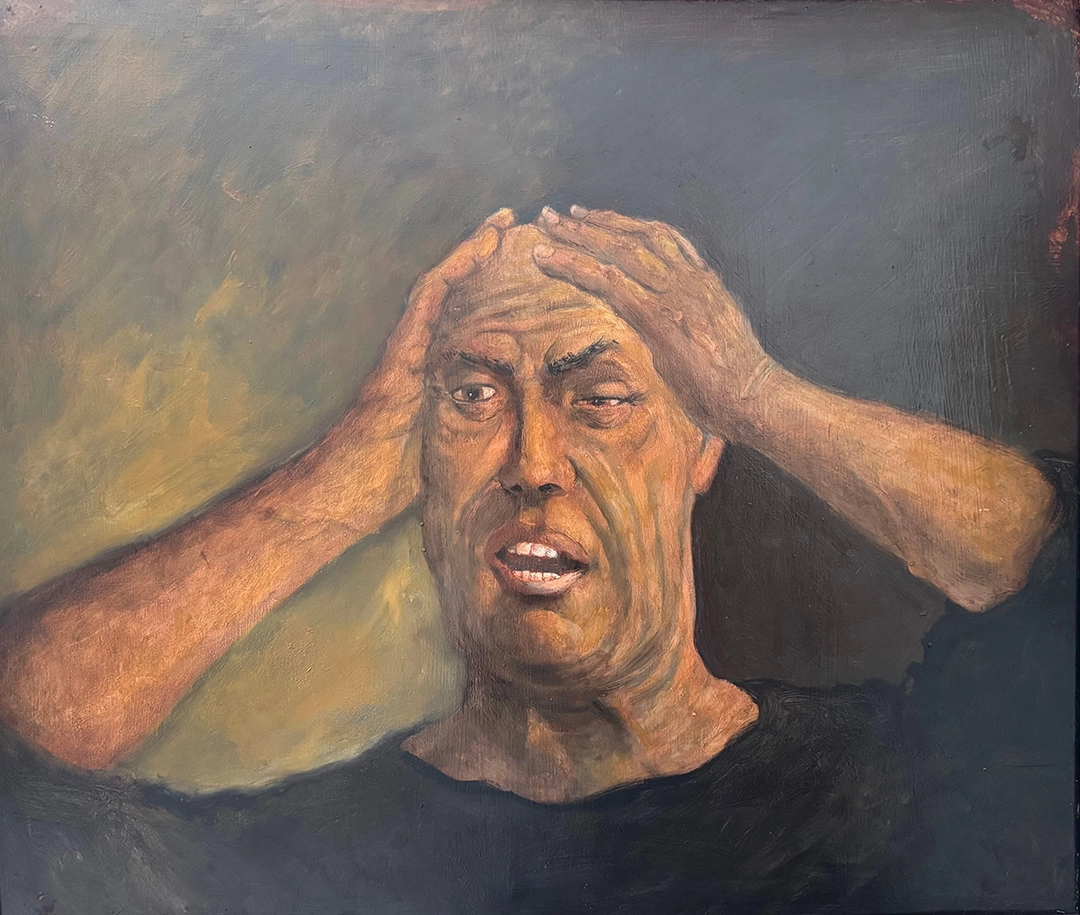
Self-portraiture was another thread, especially in later years. Some are straightforward likenesses, others experiment with color and abstraction.
His son-in-law remarked, “One of my favorite paintings is one of his self-portraits. He’s holding his head and he said to me he was thinking, ‘I can’t believe I have seven children!’”
His sister remembers a painting titled “That Man at the Bar.” “It’s his self-portrait with all those women.” Many family members were familiar with his hint of humor hidden in these scenarios. His son reminds us that, “if you could make him laugh, that was a serious gold star!”
Art’s portraits and figures unfold as a human theater with clowns, companions, family, strangers, and selves with empathy and intensity.
Portraits & Figures
Portraiture is more than likeness; it is a search for character, emotion, and identity. It is universal and intimate; it captures both another and ourselves.
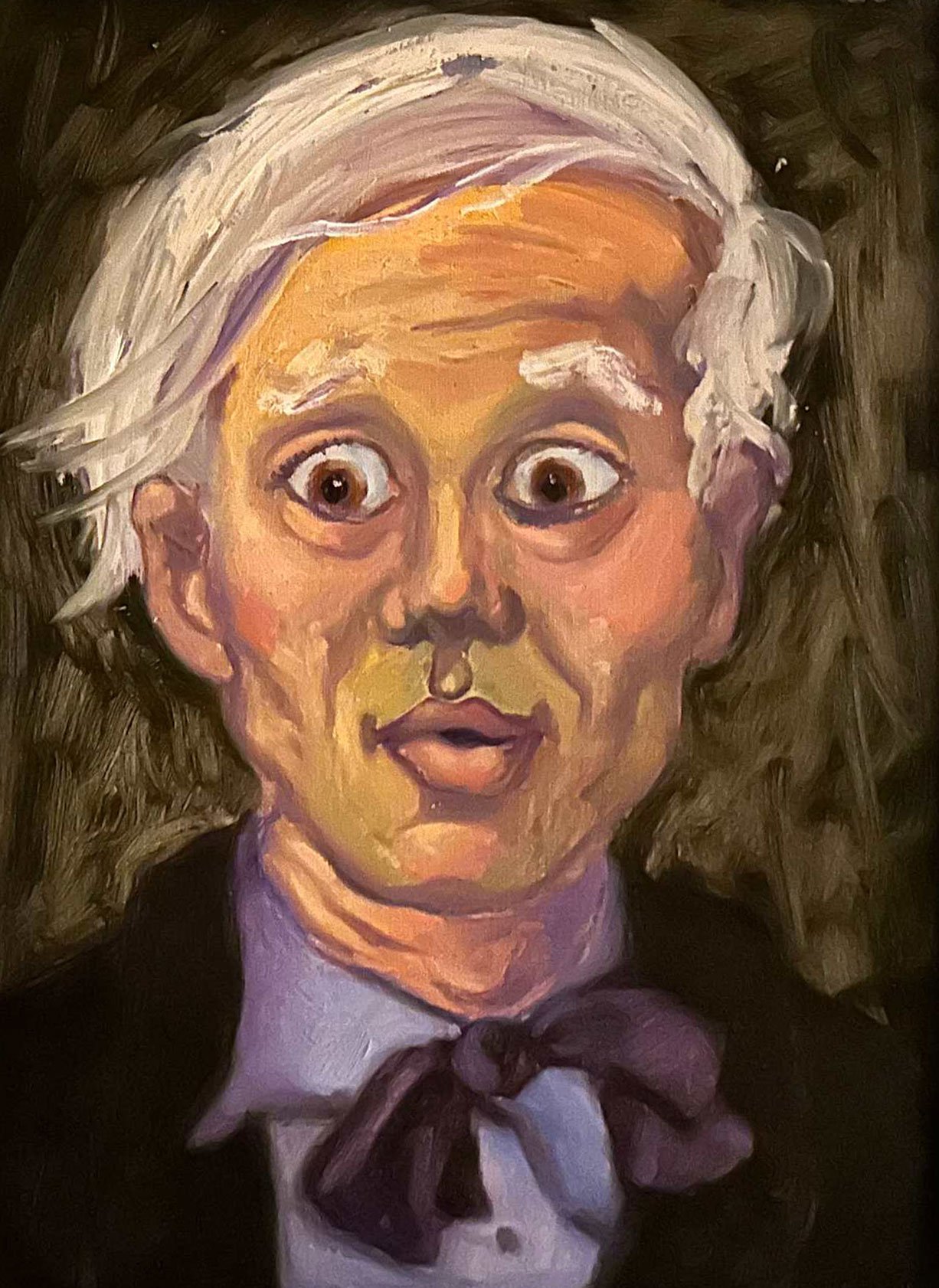
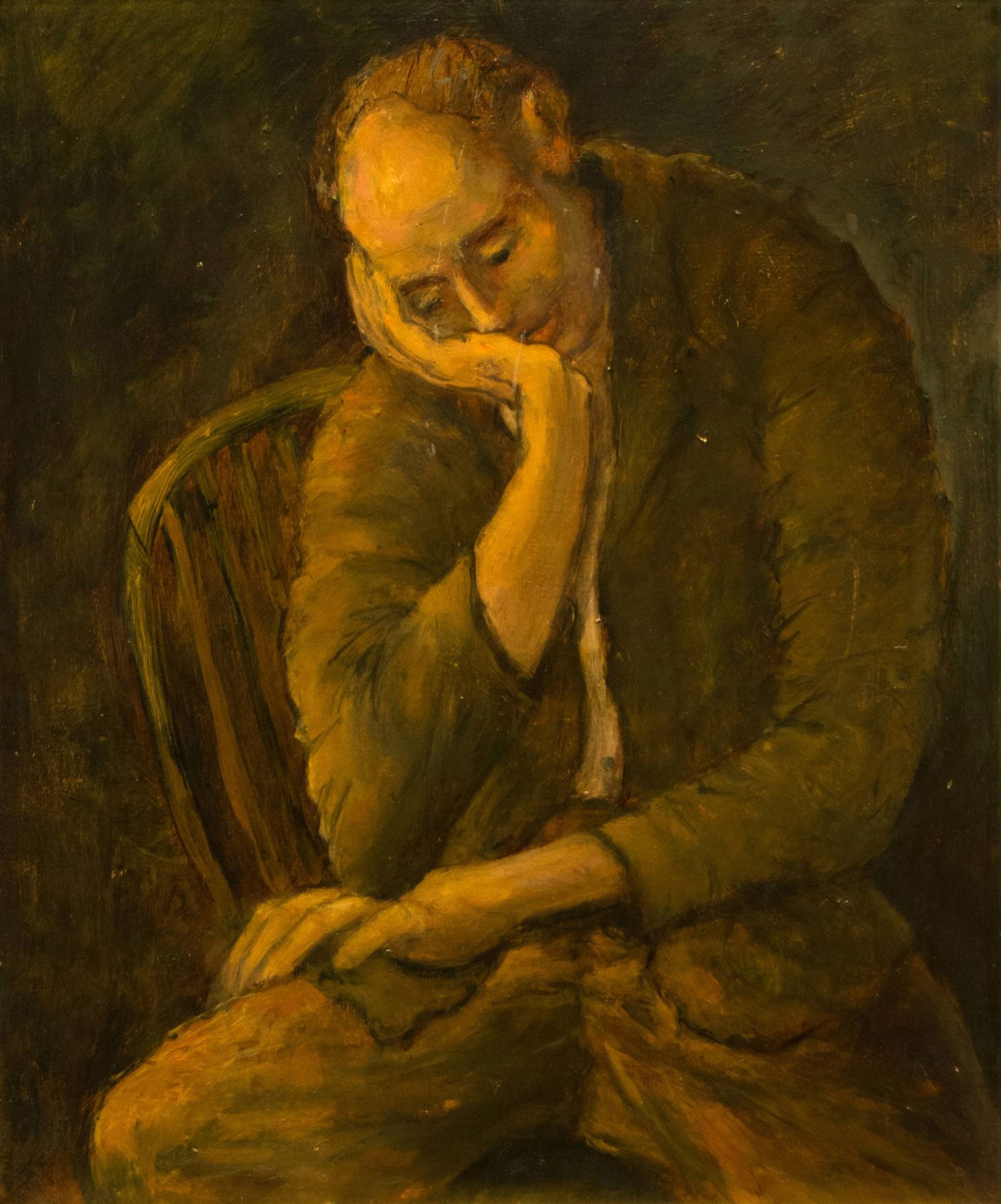
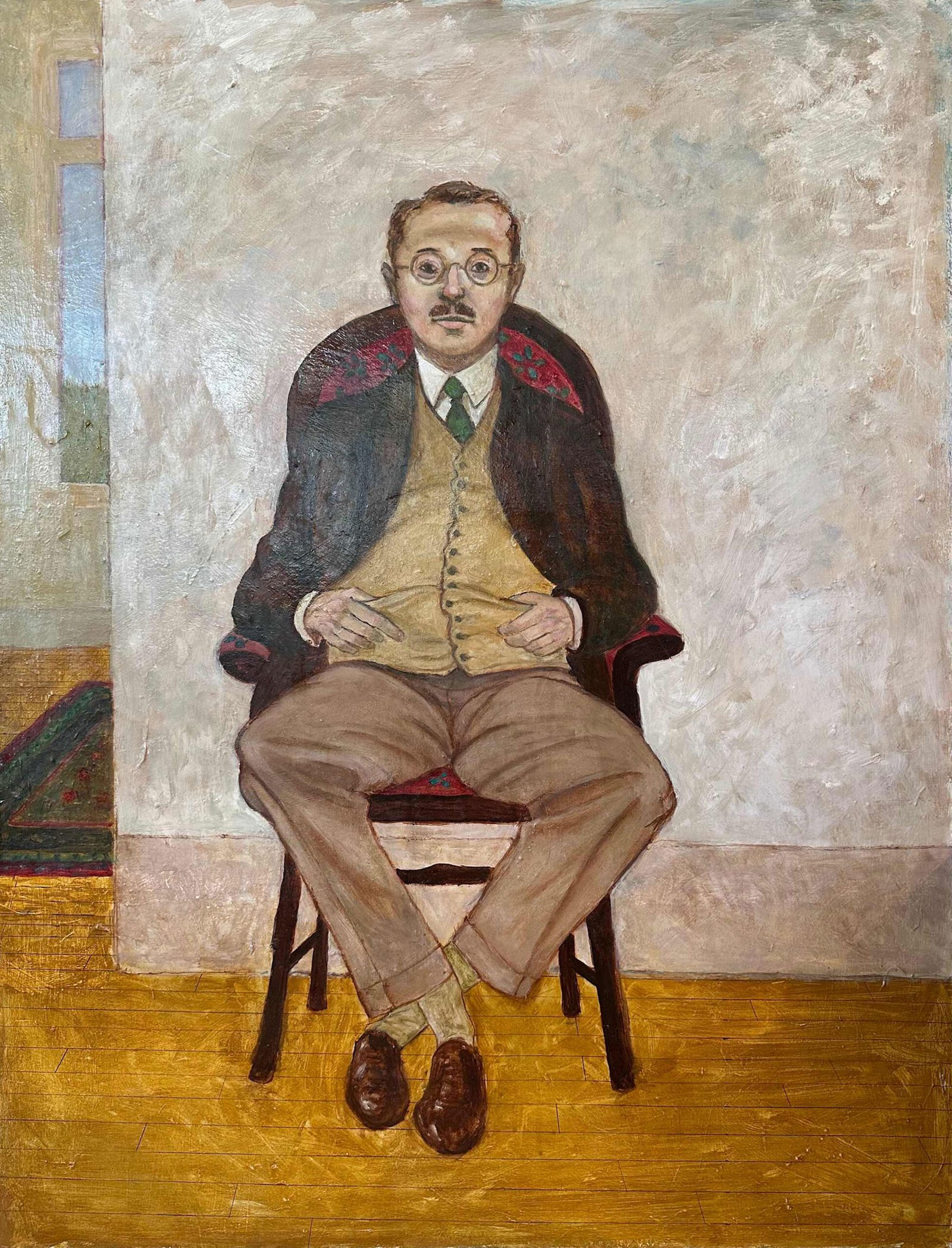
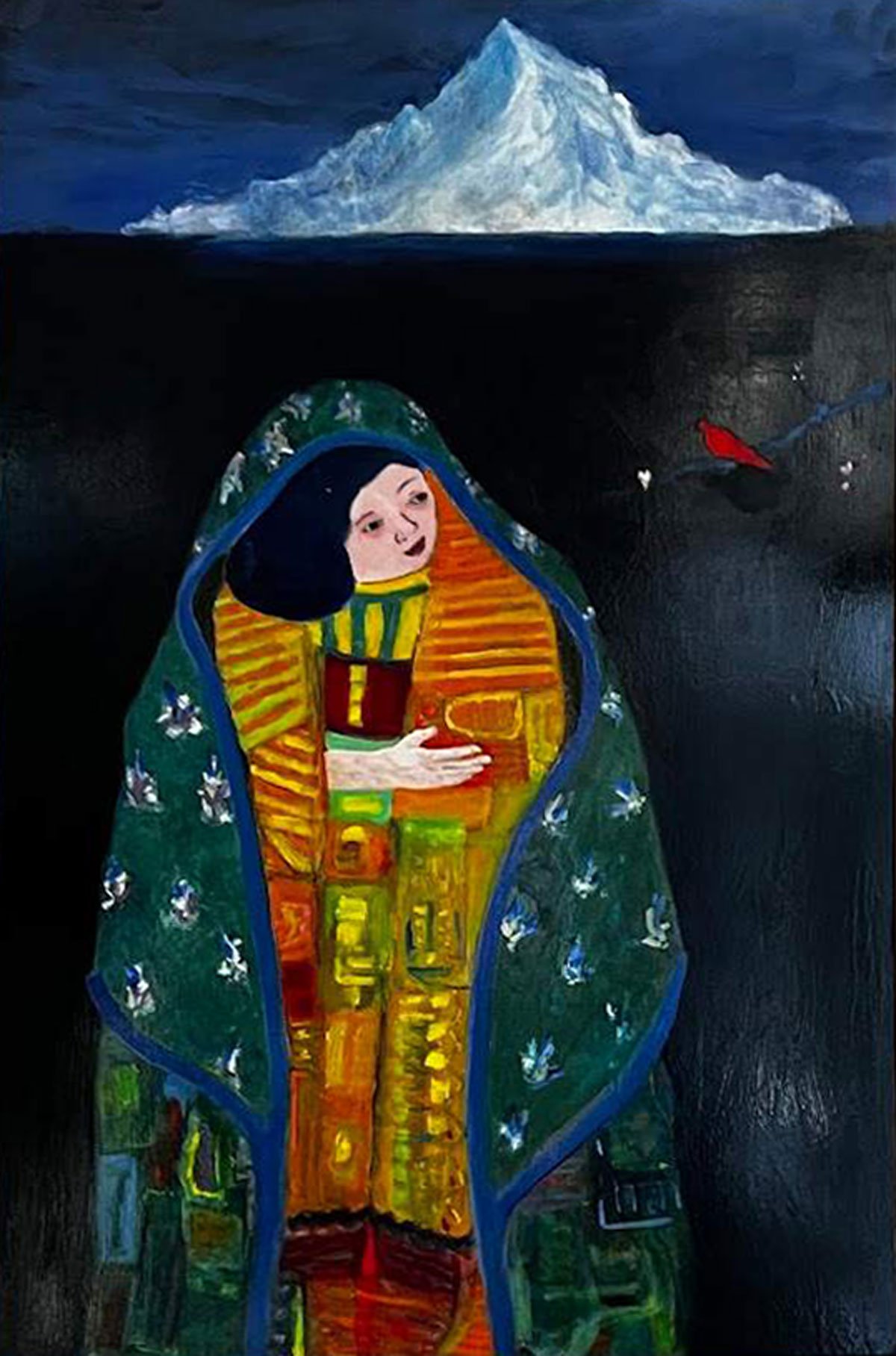
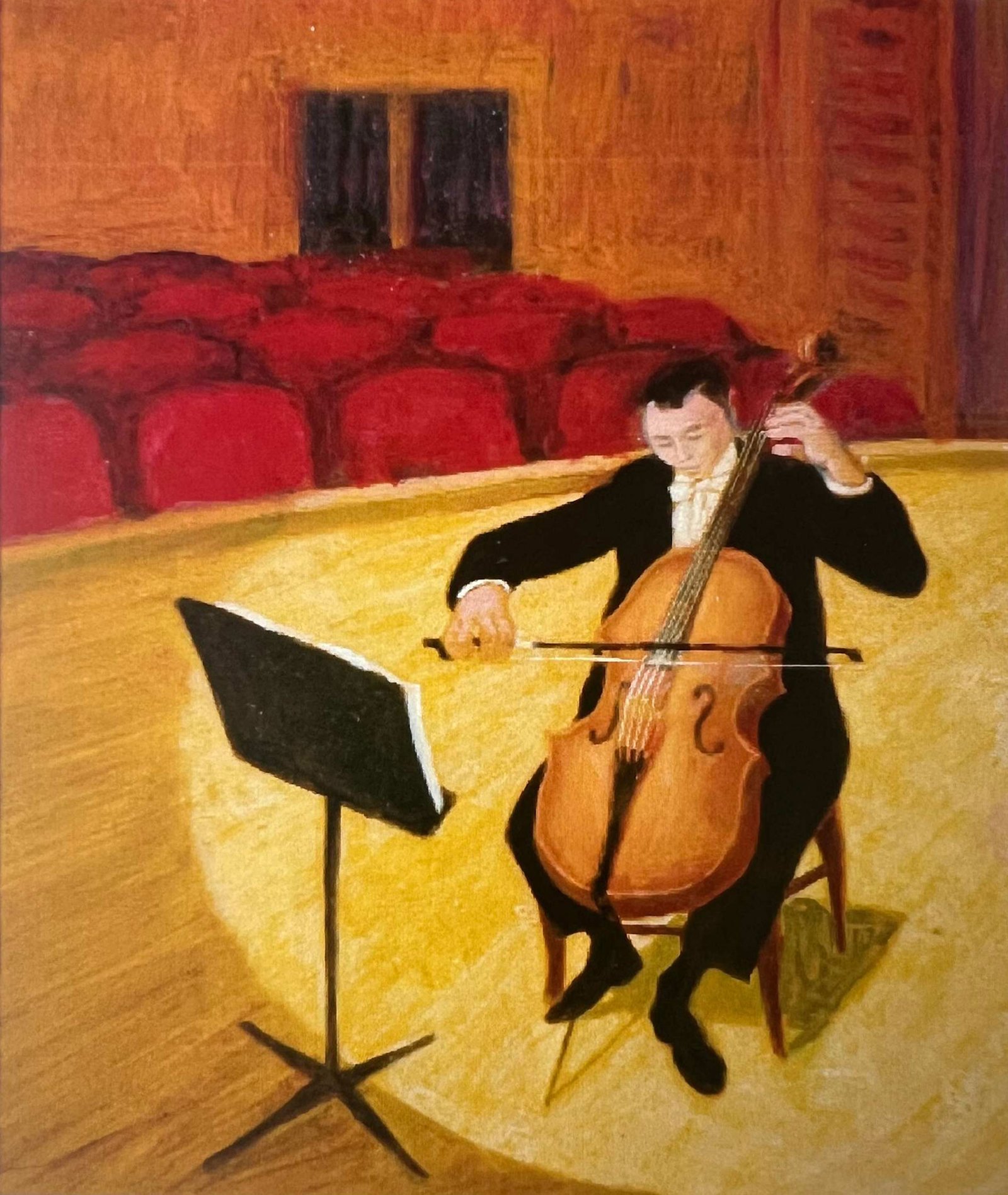
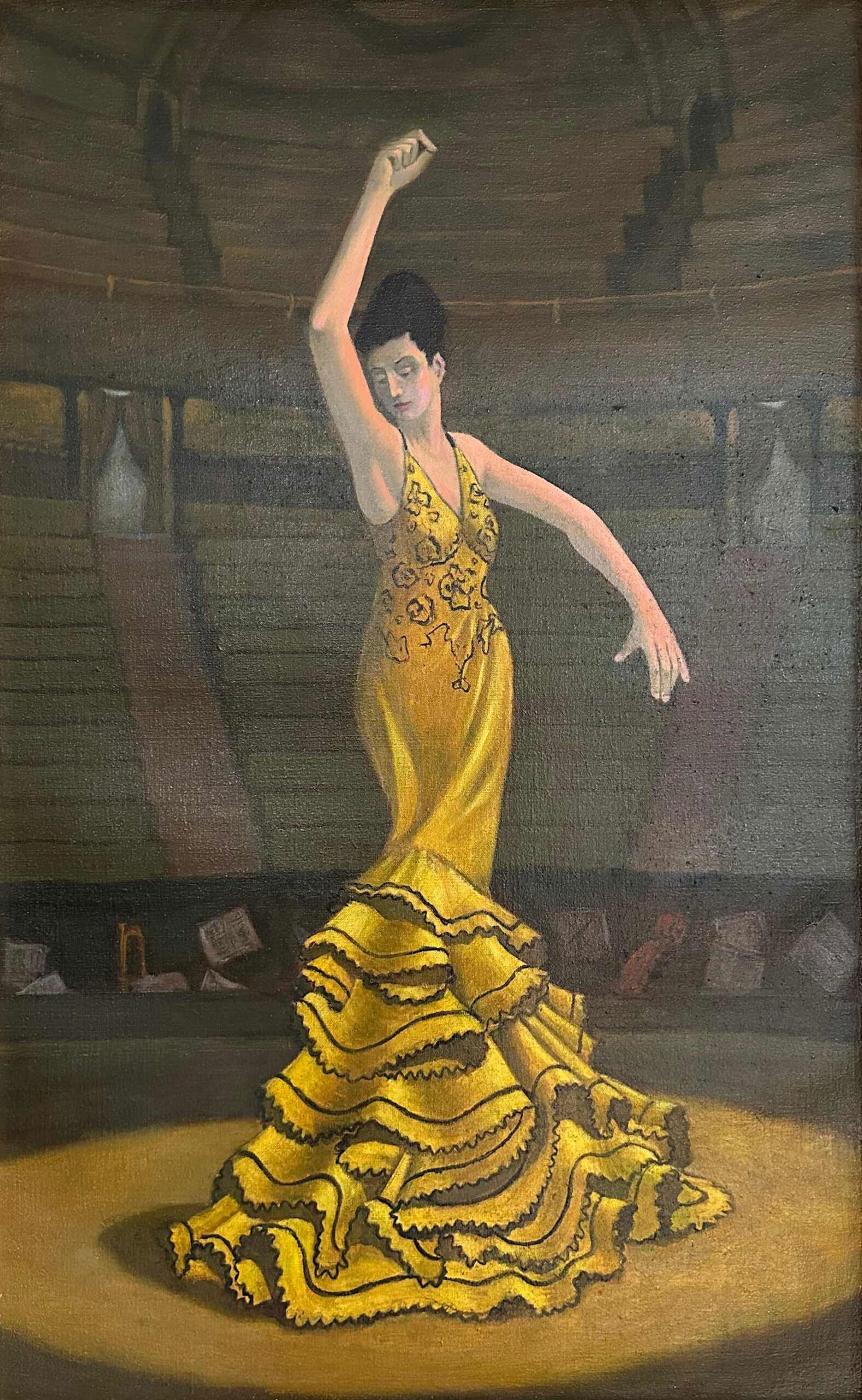
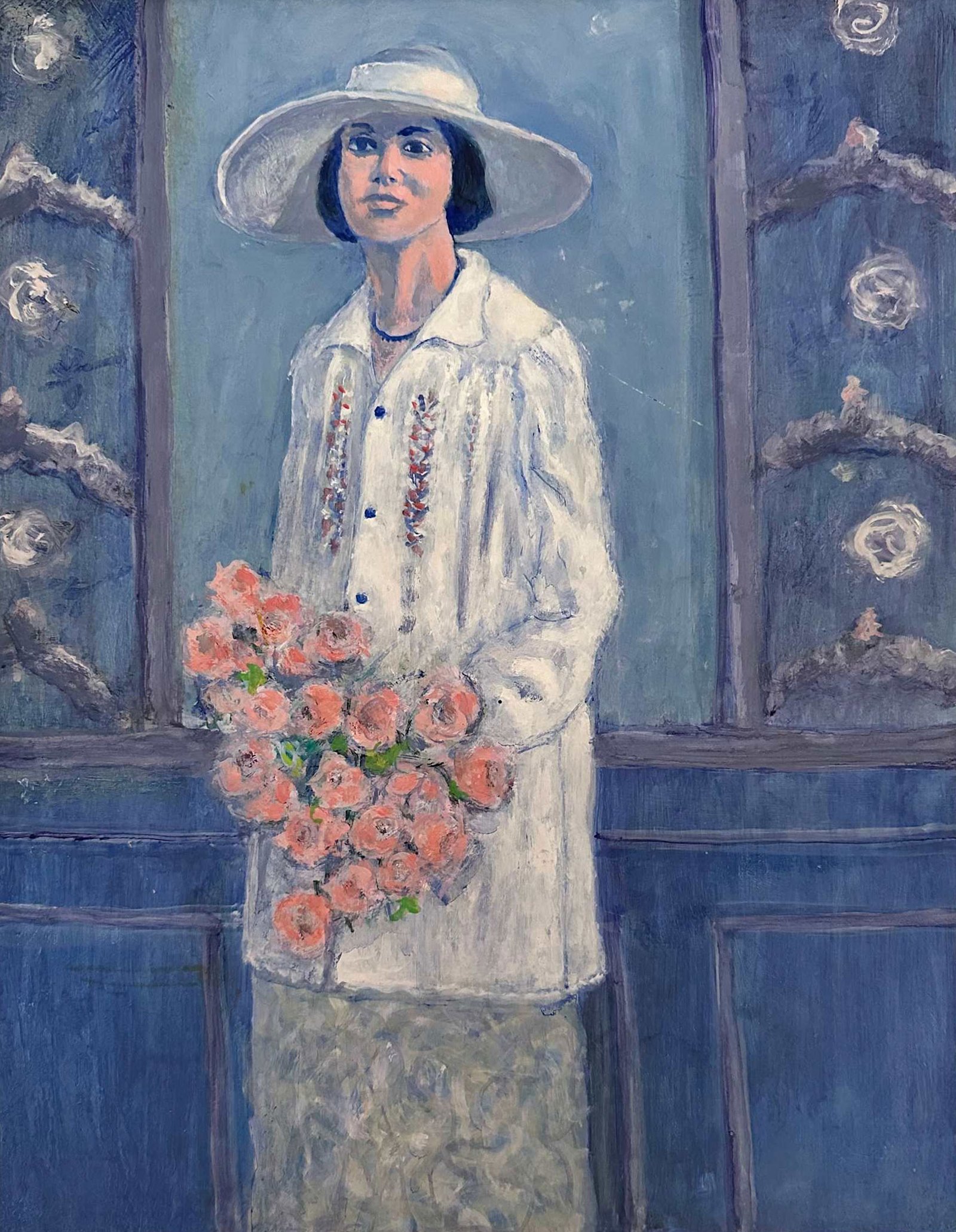
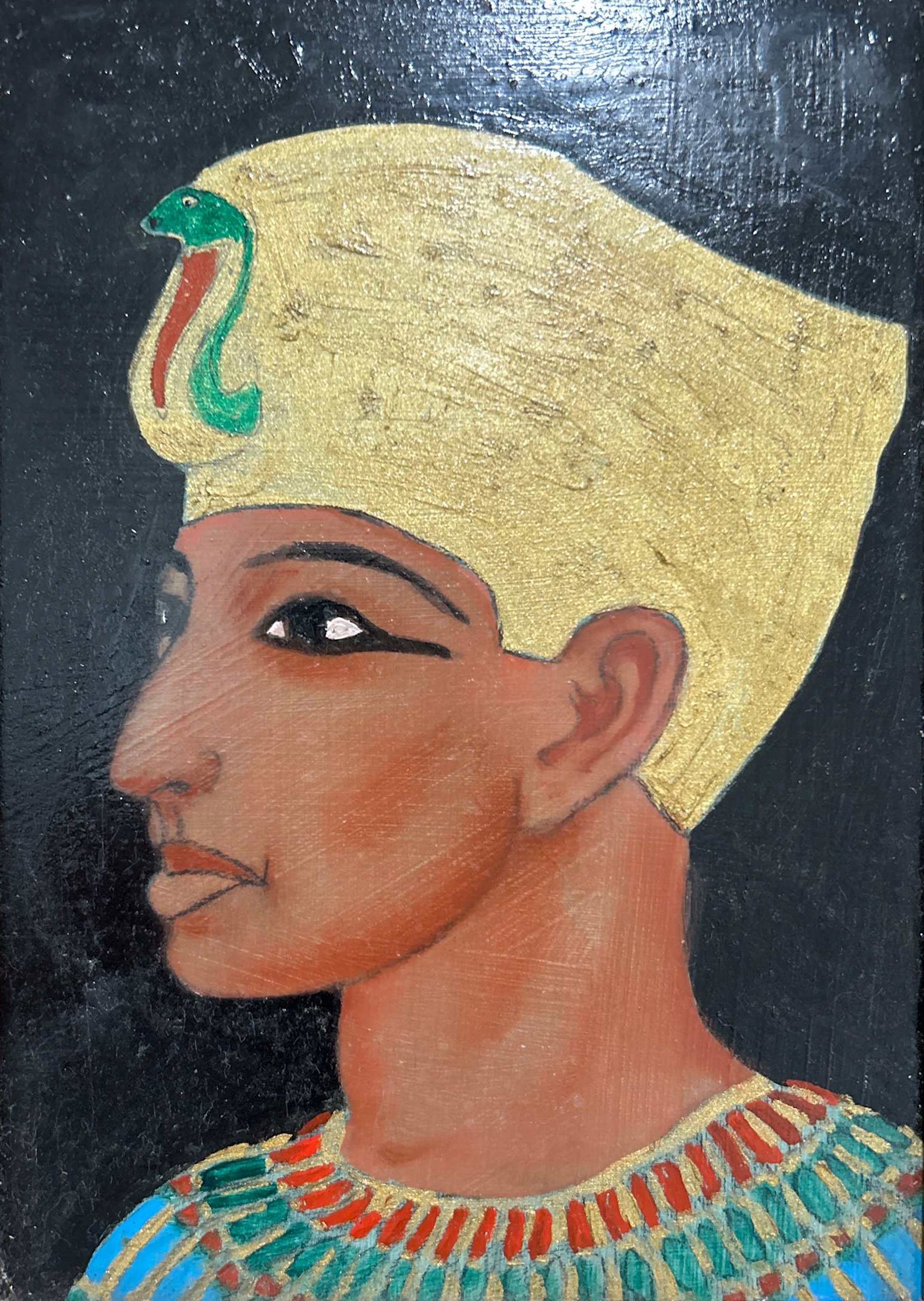
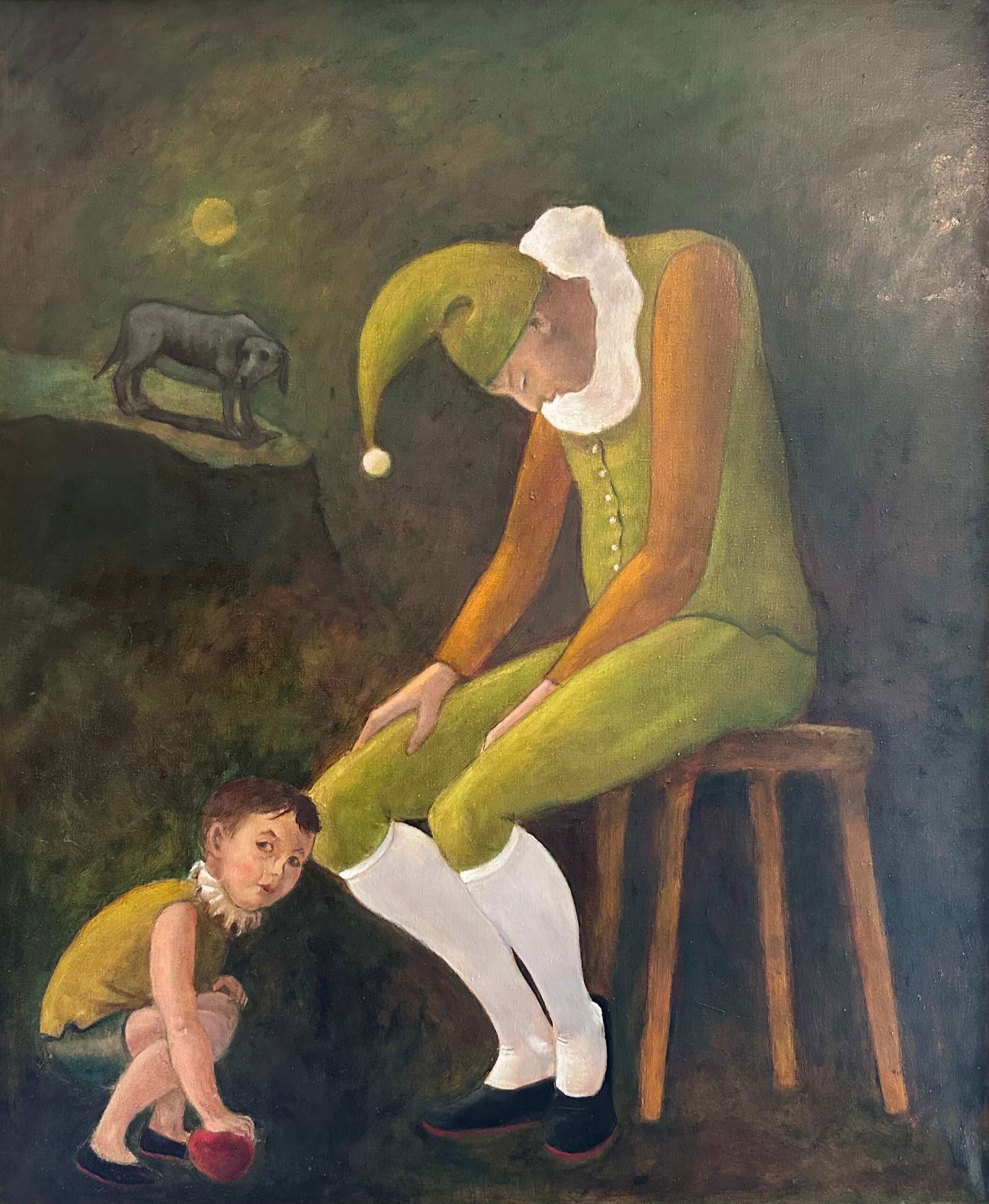
“A lot of his paintings told the story of his life. He often went back and revisited moments in his life and people that were important to him.”
Featured Artwork
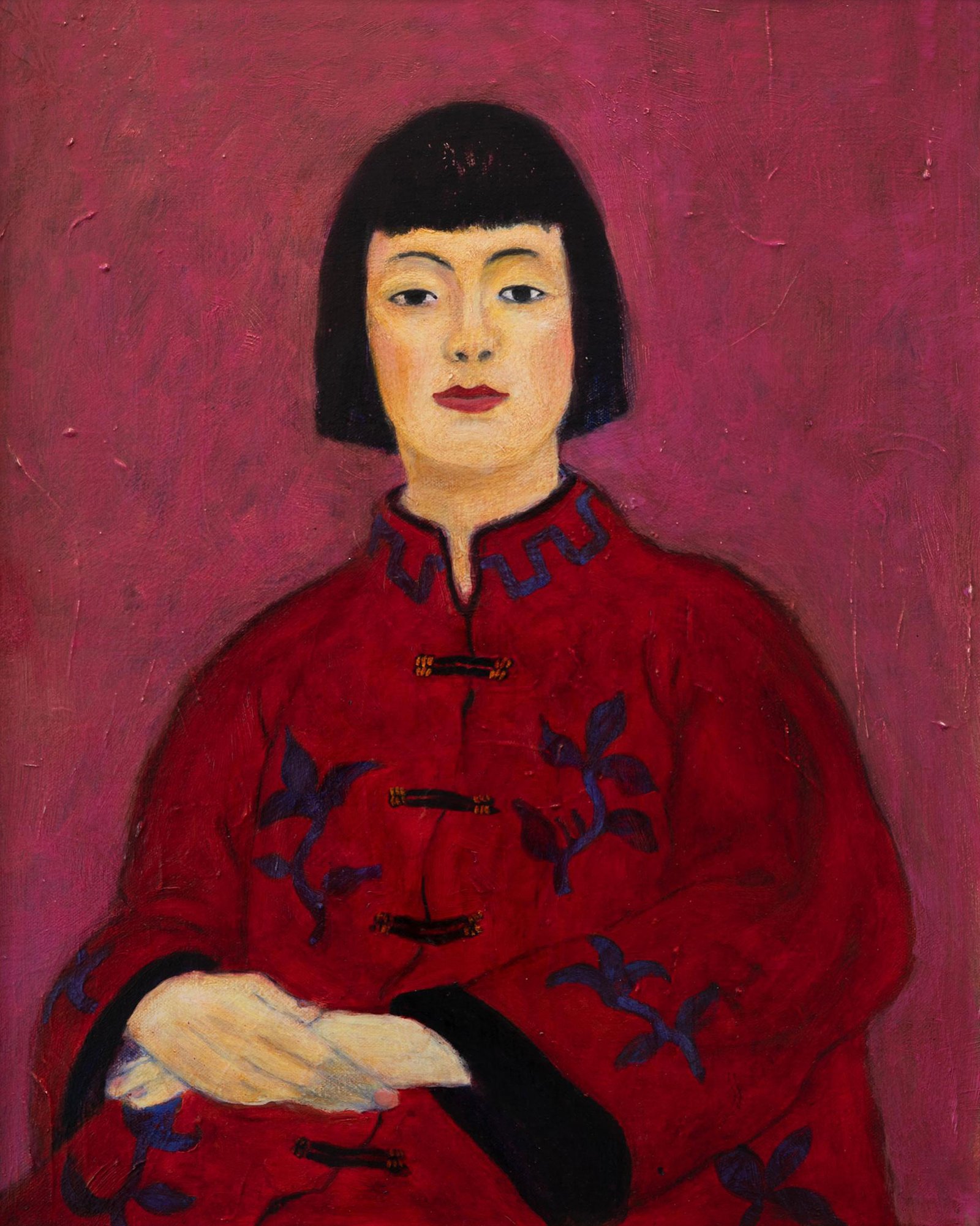
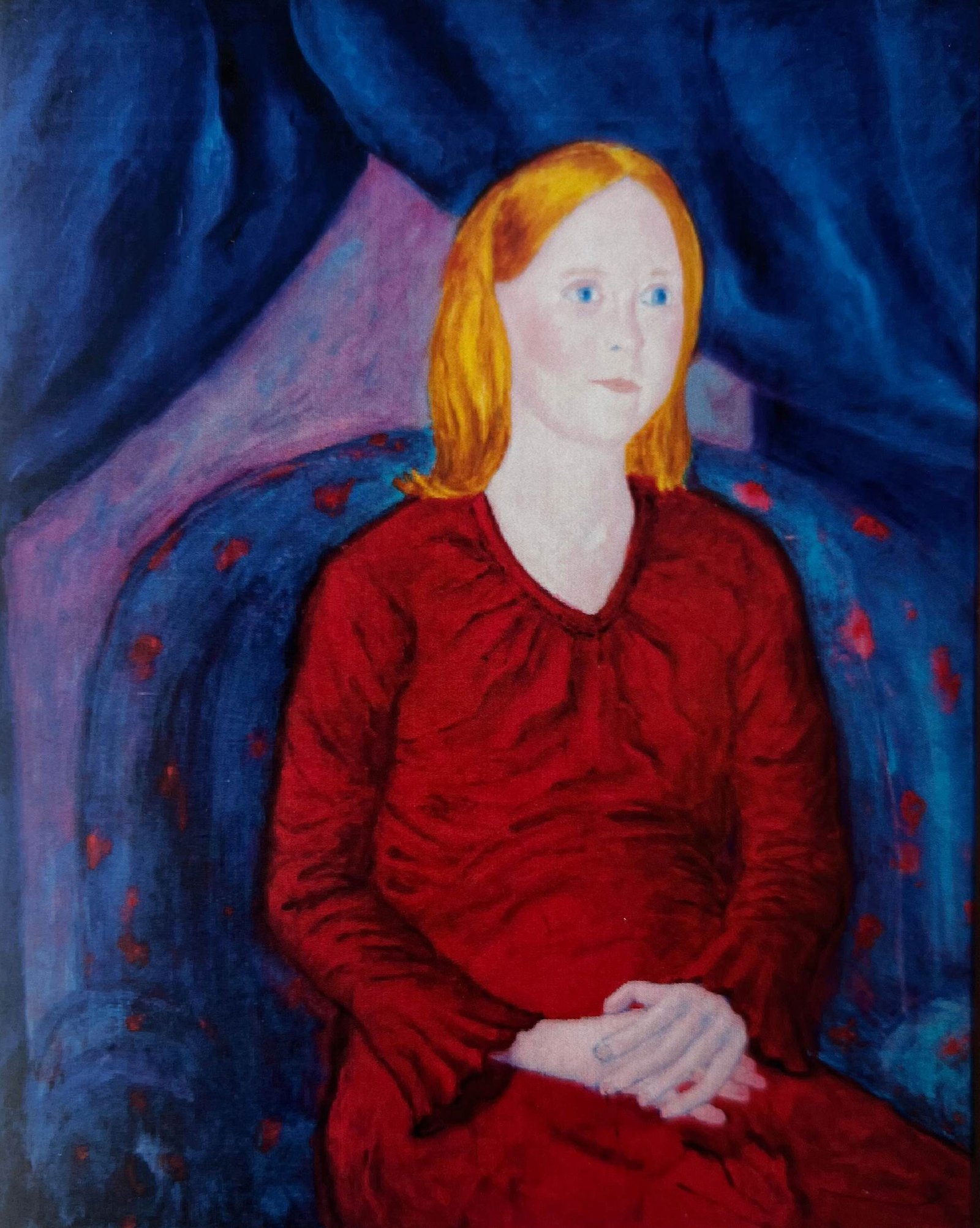
Lady in Red
Oil on board
Gebhardt often painted portraits of imagined persons. In this saturated red and raspberry portrait, an unknown woman meets the viewer’s gaze. This work shows his constant interest in color and the flattened space and restrained palette echo early modern influences from Modigliani to Gauguin.
