Personal Life
Drawn to More
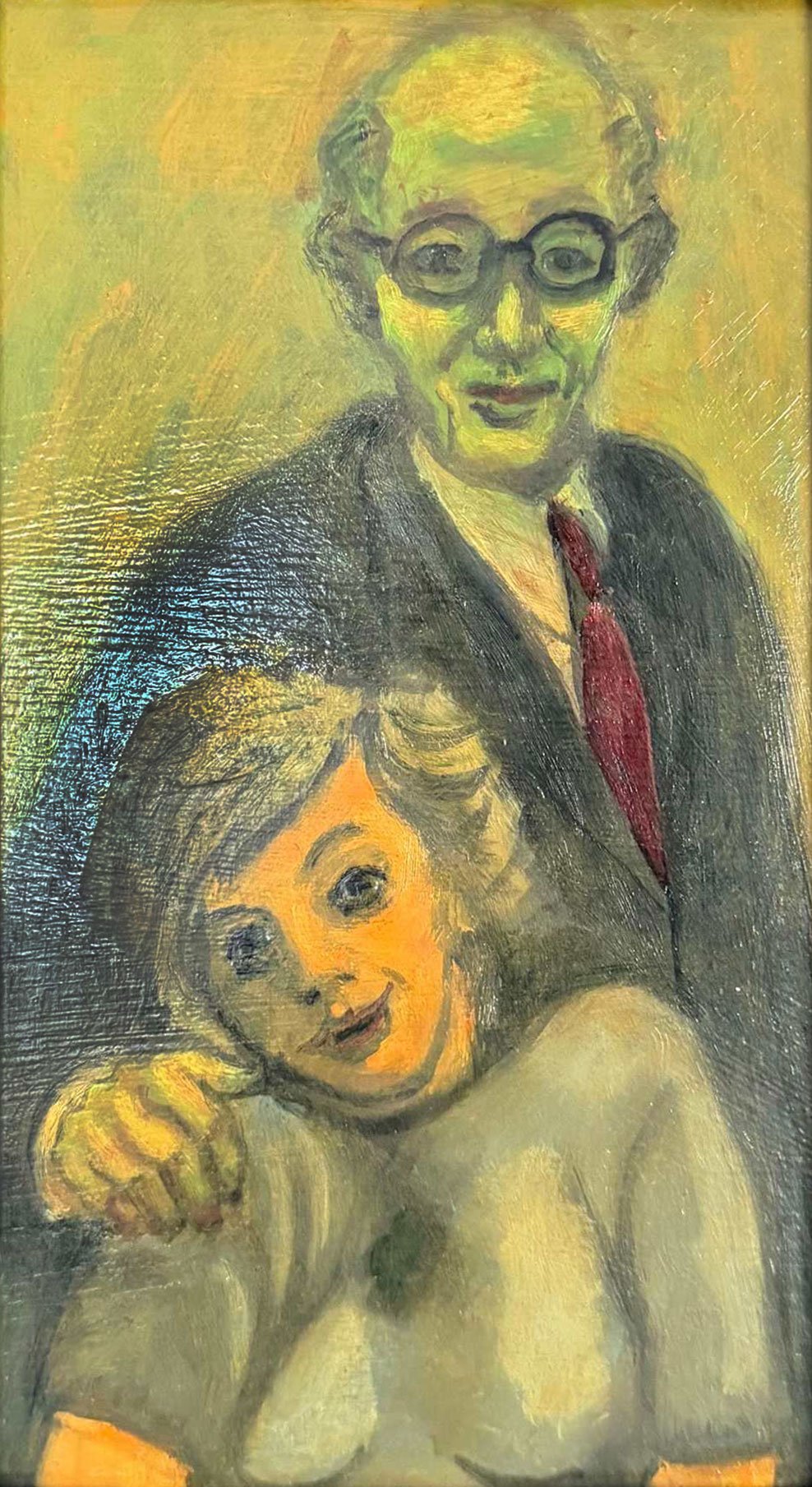
Arthur Gebhardt approached painting as an expression of his inner life and possessed a curiosity that never seemed to dim.
This man was an explorer, someone who craved connection and education. However sometimes not in the traditional sense. “One of the stories my grandmother would tell us was when he was in elementary school he would get sent to the principal’s office because he didn’t pay attention in class because he was drawing. Yet, he was the first person in his family to go to college.”
That restlessness followed him into adulthood. “He believed in hard work; and he had a deep faith, so did my mom. I see that in some of his paintings. He loved his family, nature, and his worldview was influenced by his travels.”
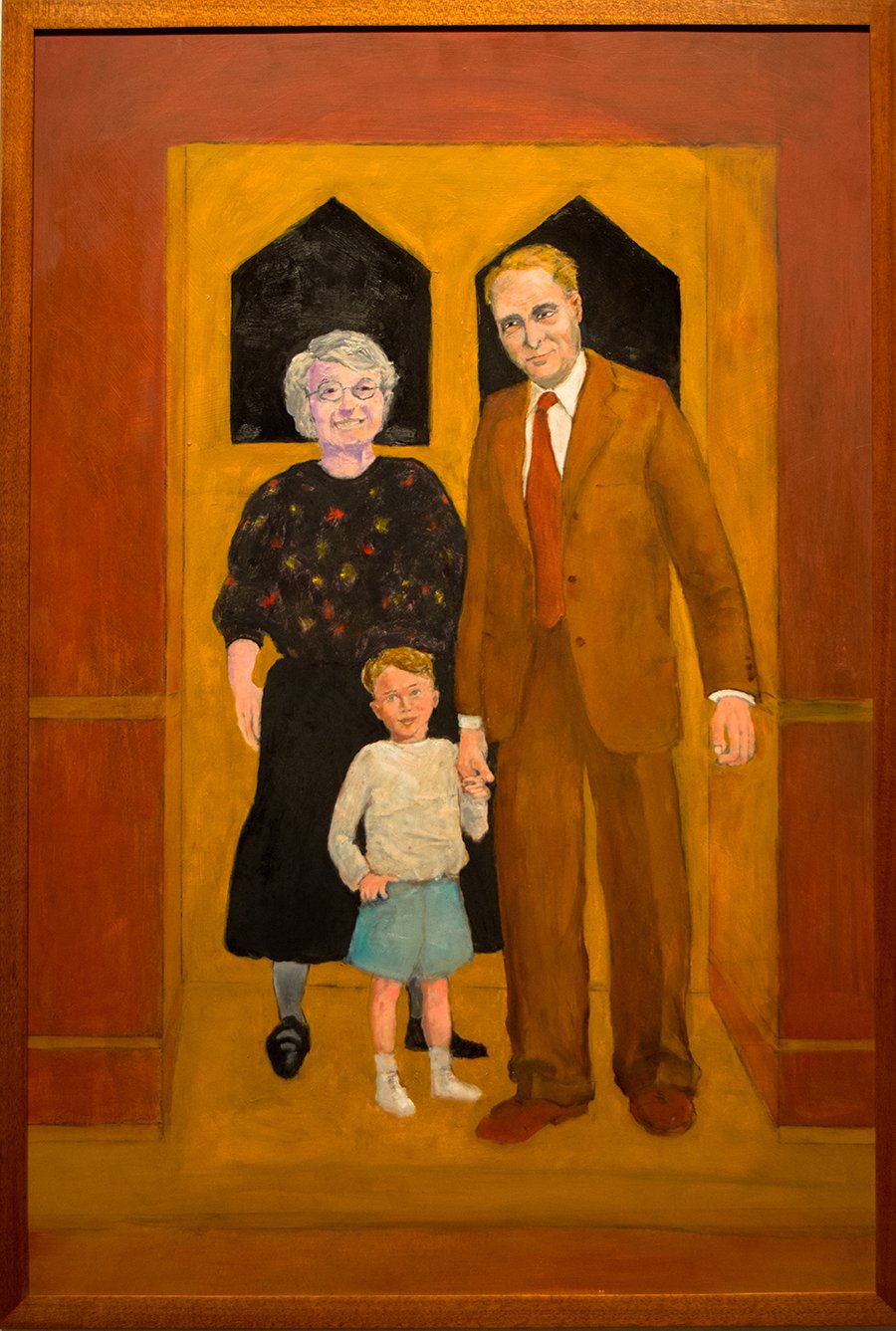
The discipline that marked his art also defined how he built his family. He raised seven children with Patty, the love of his life, his partner, and greatest ally. “My mom was a saint. She never raised her voice once. She was unbelievable, a pretty special lady. She obviously supported what he was doing and he supported what she did too. They were a good team.” She created the atmosphere that allowed him to thrive, a household full of life, sound, and creative chaos, while he continued to build the family business and paint his way through it all. Together, they found rhythm in the balance of family and faith, art and work.
The Art of Living
With Patty (also later known as “Poppy” to grandchildren) beside him as the anchor that steadied it all, they had a world that was full of children, laughter, and equal parts chores and caretaking. “He wrote a set of rules for the house, and we all had jobs… forever!”
Those moments stitched together a kind of family mythology—the weekends, the sound of laughter from the tennis court, and the Sunday brunches. “I remember on Saturdays we would watch Jackie Gleason and he would lie on the couch completely exhausted (having been fed) and we would all take turns rubbing his bald head.”
Family was central to Art and always, literally, top of mind.
And, those routines continued throughout the weekends. “He taught us tennis. And my dad was a really good golfer. We belonged to this club, and he’d take us there once a month on Sundays for brunch… all nine of us, and we’d play tennis, golf, and swim. He managed to make sure we were doing something every weekend.” He was a stellar athlete himself. He loved playing tennis and golf with friends and family. He swam morning laps in the pool at his Club Circle house.
A World of Ideas
He loved to travel and especially loved to visit museums around the world. He was often your own personal tour guide. “He took us to museums. You didn’t need a tour guide because he knew what we were looking at. We missed a lot of rooms because he went to all the rooms he liked best! One time we did a trip to DC to the Smithsonian and the Hiershhorn, and we spent time with all the art he liked because that is what he knew best. It would be Picasso, never the rooms with Etruscan art!”
Throughout his life he was a voracious reader, he read tons of books about anything that interested him. “He loved the library. I remember him checking out five books, reading three and saying, ‘Ellen I had to return the other two. They were crap.’ When we were young, every week he chose books from the library for all of us. He brought me books I would have never known. Once, I got something on Galileo, and thought, I’m not doing this!’”
A Searching Faith
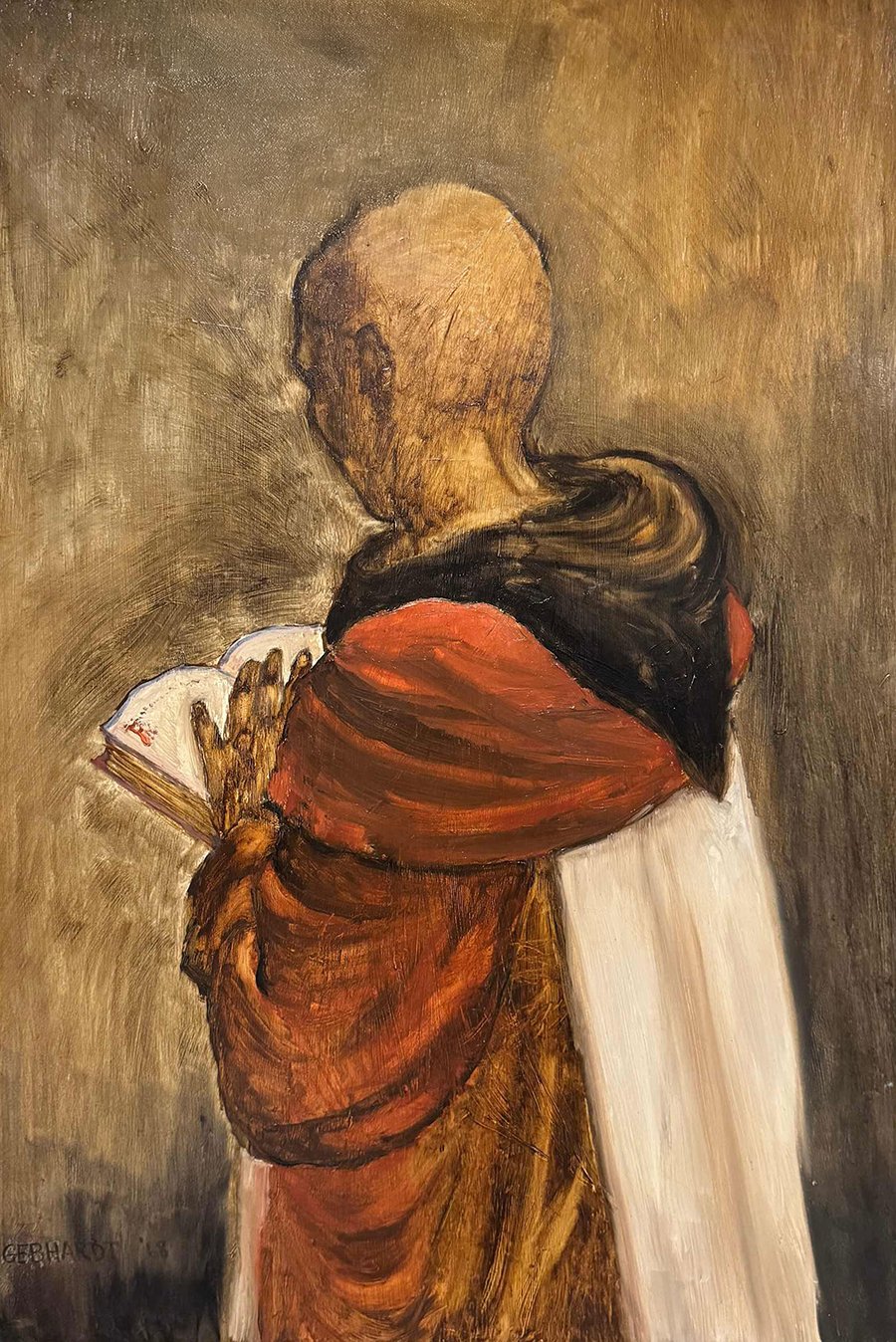
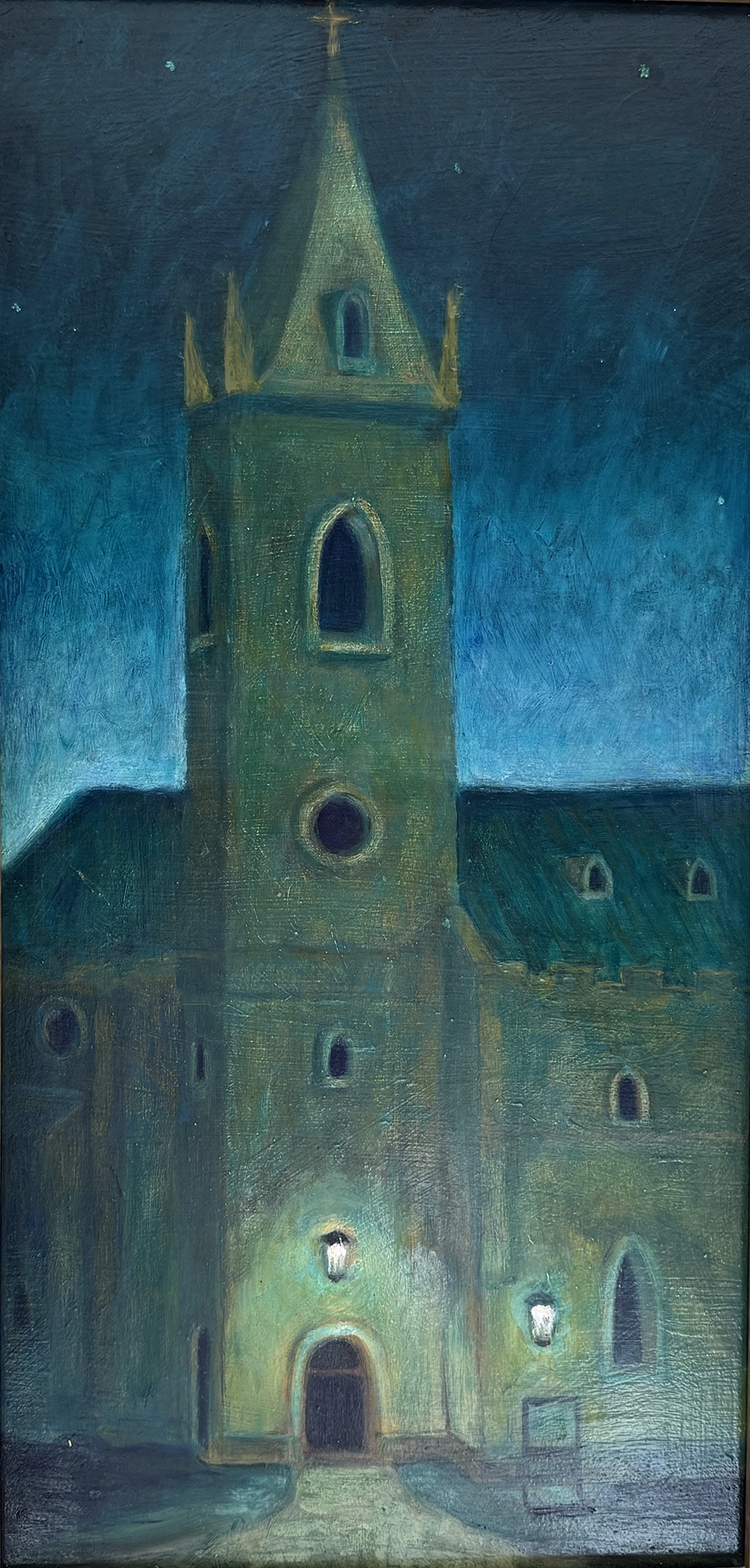
In addition to his children, his Catholic faith was a large part of his life and his life with Patty. They attended St. Roberts Church and St. Eugenes, among other parishes. He counted a number of Jesuits as fast friends. He was a firm supporter of Cardinal Stritch University, his alma mater Marquette University High School, and many other Catholic educational institutions.
“[He had a] Deep faith. Initially it was the Catholic faith, but he became much more introspective as he aged, so much so that he would seek out and read philosophers and saints’ works, and go on silent retreats. They were run by the Jesuits. He really enjoyed those, where he could be quiet and meditate. He was very serious about his one-on-one with Jesus—that was important to him. For him it was all by example.”
His faith, like his art, wasn’t fixed. It shifted and changed with age, questioning and the seasons of his life.
“He became disaffected by the church for 15 years, and then he returned. When he did, I gave him books, and I can remember sitting and talking to him about what happens after death? Like asking questions, ‘Do you have an idea? Do you know?’ I talked to him more about those things and I look at that as part of how I came to be who I was (am). My mother was very conservative at the end of her life, but it was my dad who wandered the world with thoughts and ideas and was much more open to things. I thought that was because he was an artist.”
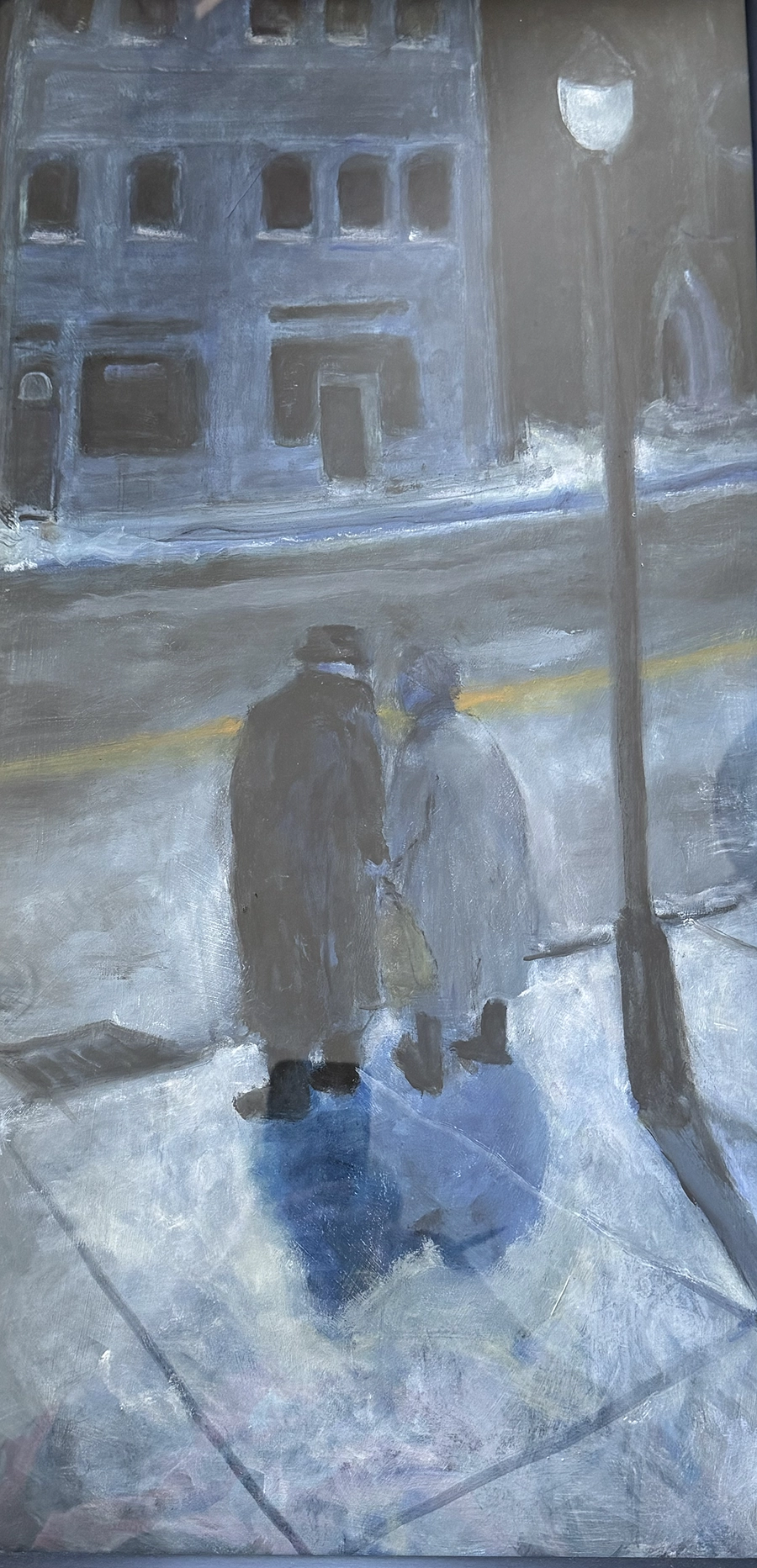
The questions he once asked about faith became personal when grief arrived. He lost his wife Patty, partner of 63 years, in 2014. He also turned to his faith at the untimely loss of his son Joseph and well-loved sons-in-law. His daughter describes: “We lost my mom in April 2014, and then I lost my husband in June, so Dad and I were in the same boat. Neither of us had significant others. We kind of bonded on that. It was a strange bond—we went to grief groups together and we were going through our journeys together too. That’s when I got really close to him. I watched him become very broken at that point, but I also watched him heal too. And then he met a woman. My siblings didn’t understand, ‘Why is dad dating another woman?’ I said, ‘because he is lonely and by himself.’ I knew that feeling because I had felt the same way. During that time, Dad and I really understood each other.”
The Gift He Gave
That connection between faith and healing shaped his later years. He read constantly, drawn to writers and philosophers who wrestled with the same mysteries he painted. His belief lived in small moments—who he spent time with, what he chose to do, and the way he paid attention to beauty.
“He did say at the end of his life, ‘Thank God I had painting because all the other things I love to do I haven’t been able to keep up.’ He really came more into his painting after he retired because he could do it. I remember he said, ‘it was what saved me.’”
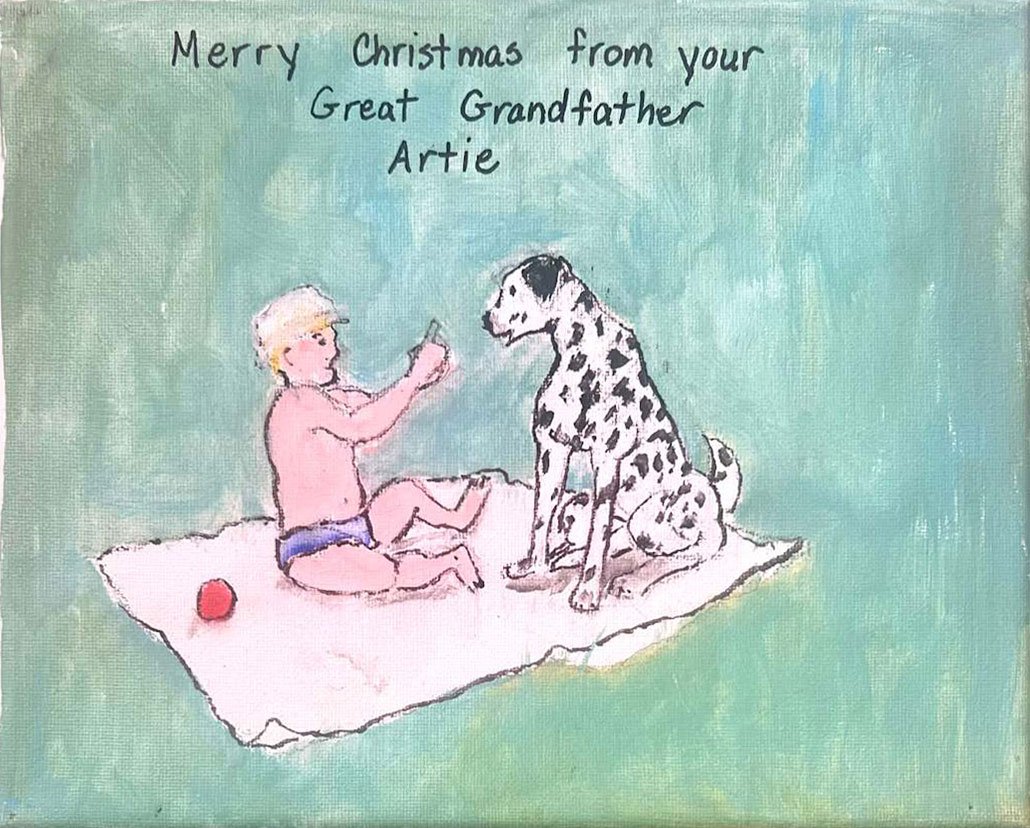
He found that same joy, in the making and giving. “The Christmas before he died he did the paintings for the great-grandchildren. He was like a kid in a candy shop. He had these little canvases that were all the same size. It was almost as though he was a little kid with all this freedom. When he was all done, his caretaker and I laid them all out on a rug, and he said, ‘OK, now who gets what?’ It was so fun for him to decide. He went through all of them and had a reason for each. It was a particularly joyful moment.”
For Arthur, faith and art were woven through everything. It might not have been something he spoke about often, but it was visible in the way he lived, and how he kept choosing to create. His faith became an inheritance, passed through the way he looked at the world. It lingers still in the art he made, the hands he held, and the way his family continues to remember him.
“Thank God I had painting because all the other things I love to do I haven’t been able to keep up… it was what saved me.”
Featured Artwork
Artwork Archive
Oil on masonite
Painted near the end of his life, this small canvas holds a world of tenderness. The work is disarmingly direct with its looseness, humor, and warmth representing the same spirit that defined Gebhardt’s lifelong relationship with his family and his art. Created as part of a series for his great-grandchildren, his final act of generosity from a man who never stopped creating.